
Decoding 2026: UAE Industrial Property Forecast & Investment Hotspots
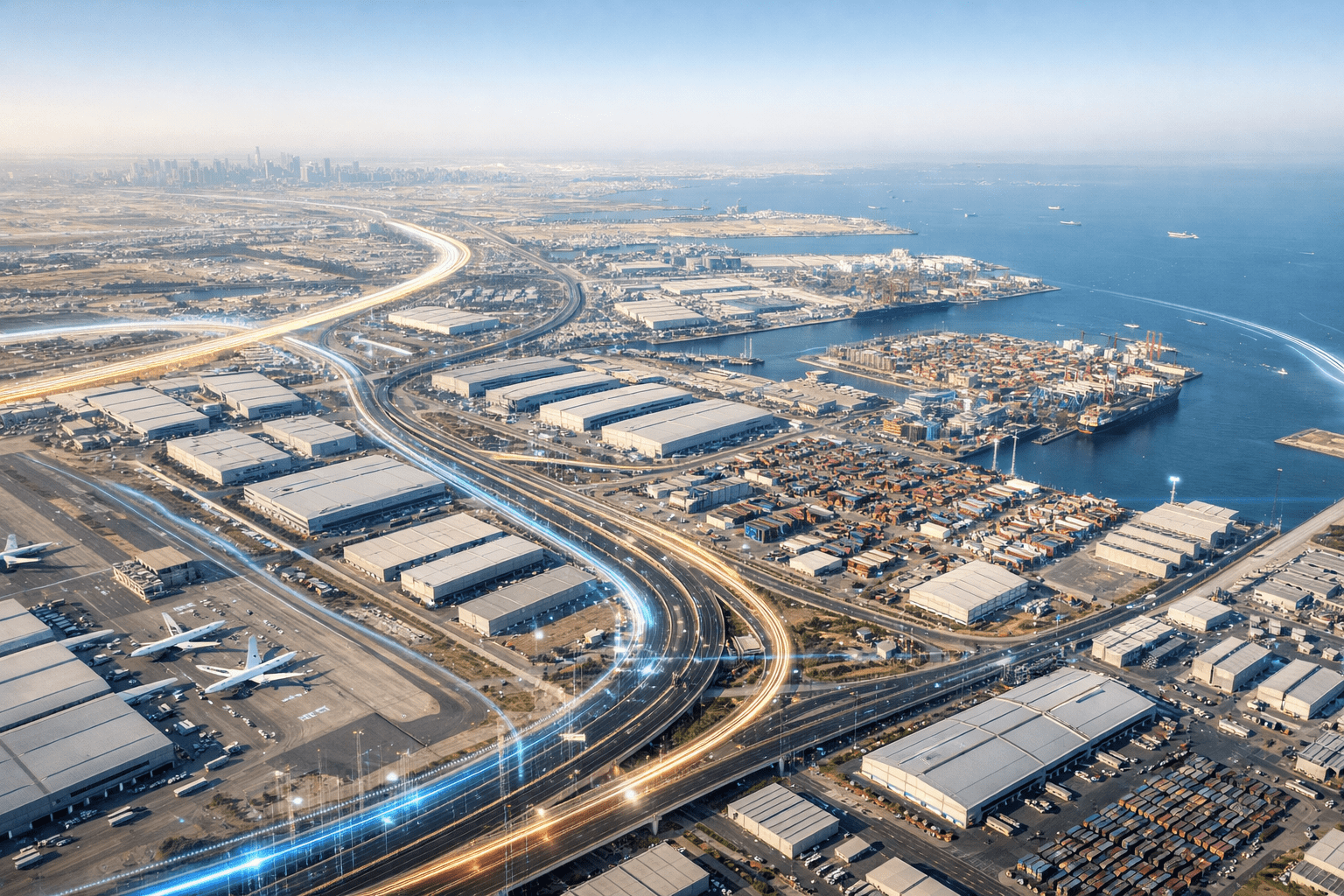
Charting 2026, we dissect the UAE's industrial property landscape, pinpointing emerging investment hotspots and forecasting sector shifts. We’re identifying the next Al Quoz 3 or DIP 2, analyzing vacancy rates, power availability, and infrastructure developments to reveal where commercial real estate will deliver significant returns and redefine logistics hubs. For expert insights and listings, visit findcommercial.ae – your trusted source for UAE commercial properties.
Introduction to UAE's Industrial Boom in 2026
The UAE's industrial real estate sector is poised for a transformative year in 2026, driven by robust economic diversification, rapid technological advancements, and substantial strategic infrastructure investments. The Central Bank of the UAE anticipates real GDP growth of approximately 5.3% in 2026, an increase from 4.9% in 2025, propelled by both oil and non-oil sectors (source). Non-oil sectors are expected to expand by 4.8%, while hydrocarbons may see 6.5% growth, with Abu Dhabi's GDP projected at 4.6% (source).
The commercial real estate market, valued at USD 24.6 billion in 2024, is forecasted to reach USD 45.68 billion by 2030, growing at a CAGR of around 7% from 2023 to 2028 (source, source). This expansion is particularly pronounced in industrial and logistics segments, as the market shifts toward high-quality, sustainable, and tech-integrated spaces across key emirates like Dubai, Abu Dhabi, Sharjah, and Ras Al Khaimah. Investors are increasingly focusing on operational efficiency, specification alignment, and infrastructure connectivity rather than mere scale (source).
This in-depth guide delves into detailed forecasts, emerging hotspots, vacancy dynamics, infrastructure pipelines, and power availability, equipping investors with comprehensive insights to capitalize on opportunities while mitigating risks.
2026 Market Forecast: Selective Growth Amid Supply Constraints
Entering 2026, the UAE industrial market is characterized by selectivity, with new supply deliveries anticipated to be 42% below the 2023 peak due to reduced speculative construction and a focus on build-to-suit developments (source). Warehouse rents have surged by 12.5% annually, reaching an average of AED 42 per square foot, driven by strong demand for premium, Grade-A assets in logistics and manufacturing (source).
Overall, the sector is buoyed by record-breaking transactions and sustained GDP momentum, though some segments may experience moderated growth due to maturing markets and global influences (source, source). Construction output is projected to grow by 5.2% in 2025, followed by an annual average growth rate (AAGR) of 4% from 2026 to 2029, supported by investments in energy, transport, housing, and industrial projects totaling over AED 200 billion in Abu Dhabi alone (source, source).
Industrial construction specifically is expected to expand by 3.9% in real terms in 2025, transitioning to steady 4% AAGR thereafter, amid a broader push for advanced manufacturing and sustainable tech hubs (source).
| Metric | 2025 Value/Forecast | 2026-2029 AAGR | Source |
|---|---|---|---|
| GDP Growth | 4.9% | 5.3% | source |
| Commercial RE Market Size | USD 24.6 Bn (2024) | Toward USD 45.68 Bn by 2030 | source |
| Warehouse Rent Growth | 12.5% annual | Continued upward | source |
| Construction Output Growth | 5.2% | 4% | source |
| Industrial Construction Growth | 3.9% | 4% | source |
Emerging Investment Hotspots: Beyond Al Quoz 3 and DIP 2
As traditional hubs like Al Quoz 3 and Dubai Investments Park (DIP) 2 mature, investors are turning to emerging areas offering superior connectivity, sustainability features, and growth potential. Key hotspots for 2026 include Dubai South for its logistics prowess near Al Maktoum International Airport, Palm Jebel Ali and Dubai Islands for waterfront industrial-mixed developments, and Emaar Beachfront and The Oasis for high-end commercial integrations (source, source).
In Abu Dhabi, Yas Island and Hudayriyat Island are evolving into mixed-use industrial zones with tourism synergies, while KEZAD (Khalifa Economic Zones Abu Dhabi) boasts 98% occupancy and a 35% leasing surge, making it a prime logistics hub (source). Ras Al Khaimah's Mina Al Arab is gaining traction for coastal, sustainable tech and manufacturing investments (source).
Driving these hotspots are booming sectors like AI, renewable energy, e-commerce, fintech, and advanced manufacturing, with Dubai, Abu Dhabi, and Sharjah leading expansion markets (source, source).
- Dubai South: Premier logistics hub with airport proximity, e-commerce demand, and infrastructure supporting high ROI (source).
- KEZAD (Abu Dhabi): Near-full occupancy at 98%, with 35% leasing growth and expansions in manufacturing (source).
- Ras Al Khaimah (Mina Al Arab): Coastal developments for sustainable tech, tourism-linked industrials, and emerging as a cost-effective alternative (source).
- Nad Al Sheba & Dubai Hills Estate: Rising for mixed industrial-commercial with strong rental yields (source).
Vacancy Rates: Tight Supply Sustains Rental Pressure
Industrial vacancy rates in the UAE remain exceptionally low, underscoring a supply-constrained market. In Dubai, commercial vacancies have dropped to a historic low of 8.6%, with industrial and logistics spaces nearing full occupancy in prime zones (source). Abu Dhabi's KEZAD reports 98% occupancy, reflecting sustained demand from manufacturing and e-commerce (source).
Overall, Q3 2025 data shows hotel and office occupancies at 79%, with RevPAR up 12%, but industrial sectors face space shortages, driving rents higher (source). Logistics demand spiked 225% in 2024, and this trend is expected to persist into 2026, with low vacancies favoring investors in high-spec warehouses and build-to-suit facilities (source).
However, emerging areas may see temporary higher vacancies as new supply comes online, though prime locations will maintain sub-10% rates.
Infrastructure Developments: Catalyzing Industrial Expansion
The UAE is channeling massive investments into infrastructure, with 619 projects in Abu Dhabi valued over AED 200 billion, focusing on energy, transport, and industrial enhancements (source). Key 2026 milestones include data center constructions in UAE and Saudi Arabia, alongside expansions in KEZAD, Abu Dhabi Airports Free Zone (ADAFZ), and Musaffah for logistics and manufacturing (source).
Mega-projects like Dubai Creek Tower, NEOM collaborations, and smart city initiatives are enhancing connectivity, with a emphasis on sustainability and AI integration (source). The construction sector's 4% AAGR from 2026-2029 is bolstered by tourism, housing, and industrial investments, positioning the UAE as a global hub (source, source).
Power Availability: Ensuring Reliable Energy for Industrial Growth
UAE's power infrastructure is scaling rapidly, with installed capacity projected to reach 79.1 GW by 2035 from the current 27 GW, at a CAGR of 3.4% (source, source). By 2030, renewables aim for 14.2 GW and clean energy 19.8 GW, tripling current levels under the UAE Energy Strategy 2050 (source).
The power market is expected to grow at 4.62% CAGR, reaching 63.49 GW by 2030, with 32% from clean sources by 2030 and 44% by 2050 (source, source). Industrial controls and low-voltage systems are expanding at 8-10% CAGR, supported by smart grids, energy storage, and solar initiatives in free zones (source, source). Standard 3-phase 400/230V 50Hz systems ensure reliable supply, with gas turbines and renewables powering data centers and high-power industrial needs (source).
Benefits and Risks for Investors in 2026
Benefits
- High Returns: Sustained rent growth (12.5%+) and low vacancies (sub-10%) in prime industrial assets, with yields boosted by e-commerce and manufacturing demand (source).
- Government Support: Massive infrastructure investments (>AED 200 Bn) and diversification strategies targeting clean energy and AI hubs (source).
- Strategic Hotspots: Emerging areas like Dubai South and KEZAD offer long-term appreciation in logistics, tech, and renewables (source).
Risks
- Supply Constraints: Reduced deliveries (42% below peak) may intensify competition for premium spaces (source).
- Market Moderation: Potential slowdowns in maturing segments, with flattening prices in oversupplied areas (source).
- Global Factors: Economic uncertainties impacting demand, though UAE's resilience mitigates this (source).
Mitigate risks through thorough due diligence and focus on sustainable, high-spec properties via platforms like findcommercial.ae.
Conclusion: Positioning for Success in 2026
In 2026, the UAE industrial property market promises selective yet substantial opportunities in hotspots like Dubai South, KEZAD, and emerging coastal zones, underpinned by low vacancies, ambitious infrastructure, and expanding power capacity. Investors prioritizing sustainability, tech integration, and strategic locations stand to achieve superior returns amid a maturing landscape. Dive deeper with verified listings and insights at findcommercial.ae.
This post is for informational purposes. Consult professionals for investment advice.